
Apartment or Independent House? Most Families Get This Wrong
Category: Uncategorized
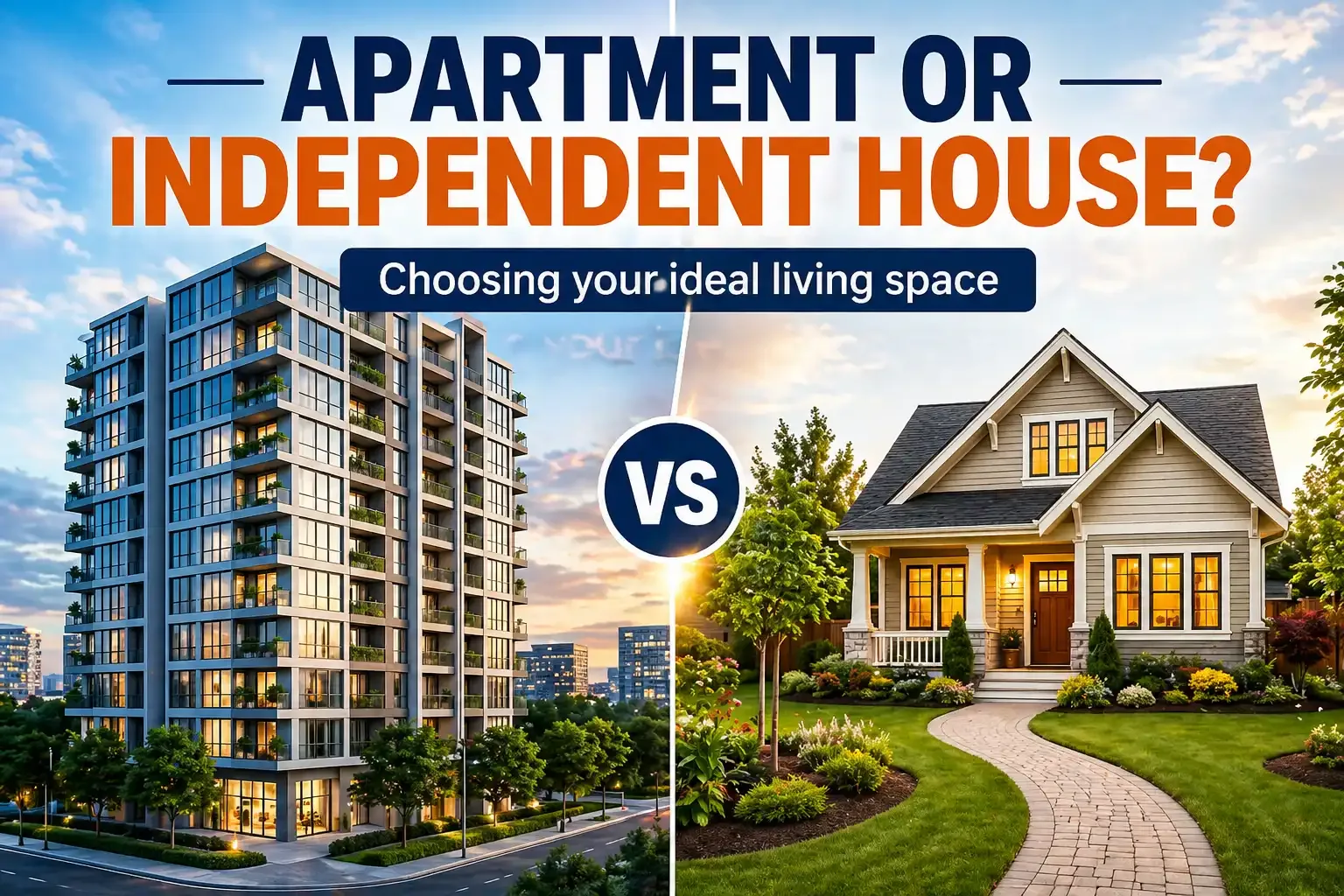
I have seen this argument play out at nearly every family dinner when the topic of buying a home comes up. One person says the apartment is safe, modern, and hassle-free. Another insists on an independent house, your land, your space, your future. And somewhere between the chai and the dessert, nobody concludes. Everyone just agrees to "think about it more."
The problem is, most families keep thinking about it for years without a real framework to decide. And when they finally do choose, they often base it on what their colleague did, what the builder pitched, or what felt exciting in the moment, not on what actually fits their life.
This article by OccupationTalk is going to change that. We're going to look at this decision honestly, practically, and with the kind of information that helps you walk away with real clarity.
What Are You Actually Buying? Understanding the Basics
Before comparing the two, it's important to understand what each option actually means in legal and financial terms — because most buyers don't fully grasp this until after the purchase.
When you buy an apartment, you are purchasing a unit within a larger building. You own the four walls of your flat, but the land on which the entire building sits belongs to all owners collectively. This is called an undivided share of land (UDS). Your UDS is typically a fraction of the total plot — sometimes as small as 30 to 80 square yards, depending on the project size and number of units.
When you buy or build an independent house, you own the land outright. The entire plot is in your name. Whatever stands on it — now and in the future — belongs entirely to you.
This fundamental difference shapes everything that follows — the finances, the flexibility, and the long-term value of your investment.
The Financial Picture: More Complicated Than It Looks
Most people think apartments are cheaper. And on the surface, they are right. The ticket price of an apartment in a decent location is usually lower than the combined cost of buying a plot and constructing a house on it.
But the real cost of any home is not just what you pay upfront.
Apartments come with monthly maintenance charges that typically range from ₹2,000 to ₹15,000, depending on the complex and its amenities. If you live in your apartment for 25 years, you could end up paying anywhere between ₹6 lakhs to ₹45 lakhs in maintenance alone — money that leaves your pocket every single month without adding any value to the asset you own.
Independent houses have maintenance costs too, but they work differently. You spend money when something needs fixing, not on a fixed monthly schedule, regardless of whether anything broke. Over time, many homeowners find this to be significantly more economical.
If you are trying to understand the full financial picture before making a decision, it helps to estimate the cost of building an independent house early so you can compare it honestly against the long-term cost of apartment ownership, including maintenance, UDS limitations, and appreciation potential.
There is also the question of appreciation. Land is a finite resource. In most growing cities, well-located land has consistently appreciated decade after decade. When you own an independent house, the land underneath it is yours — and that land grows in value even as the building itself ages. Apartments appreciate, too, but the growth is often slower because you are sharing the land value with every other unit in the building.
A useful way to think about it: buying an apartment is like buying a seat in a theatre. Buying an independent house is like buying the theatre itself.
The Space Question: Vertical vs. Horizontal
One of the most overlooked advantages of an independent house is what builders and architects call vertical expansion.
A 1,200 square foot plot can legally support a ground floor, first floor, and second floor in most municipalities — giving you up to 3,600 square feet of built-up space. Many families use this strategically. They live on two floors and rent the third, generating a steady monthly income that helps pay off any loans they took to build the home.
Apartments do not offer this option. You get what you buy and nothing more. If your family grows, you either adjust or you sell and move — both of which carry their own costs and disruptions.
There is also the quality of space to consider. An independent house typically includes a private garden, a personal terrace, dedicated parking, and a ground-level entry. These are not luxuries — for a family with young children, elderly parents, or pets, these are genuine quality-of-life factors that affect daily living in ways that square footage numbers cannot capture.
Multi-Generational Living: The Factor Nobody Plans For
India has a unique housing reality that most real estate comparisons fail to address. We are not purely a nuclear-family society. Parents age and often move in with their children. Siblings sometimes share homes during difficult periods. Extended families gather during festivals and sometimes stay. Our homes need to be flexible.
A 3BHK apartment works beautifully when it is just a couple and two children. Add ageing in-laws, a live-in caregiver, or a sibling going through a difficult phase, and the walls start closing in very quickly. The building association will not allow you to extend. The floor plan cannot be changed. You are stuck with what you have.
An independent house absorbs life's changes. A room can be added on the terrace. A separate entrance can be created for elderly parents who want independence but proximity. A portion of the ground floor can be converted to accommodate a new business or a renter if finances change.
This adaptability is not just convenient; it is financially valuable. A home that can change with your life is worth considerably more than one that cannot.
The Customisation Reality
Here is something nobody tells you clearly before you buy an apartment: almost nothing inside it is truly yours to change.
Structural walls cannot be touched. External windows and facades must match the building design. Flooring choices may be restricted by the association. Even painting your front door a different colour can require written permission from the resident welfare association in some complexes.
For many families, this is fine. They prefer a managed environment where common areas are maintained uniformly, and no single owner can make decisions that affect the appearance of the entire building.
But for families who have a clear vision of what their home should look and feel like — the layout of the kitchen, the direction of the prayer room, the size of the master bedroom, the placement of windows to let in morning sunlight — an apartment is a permanent compromise.
An independent house built from scratch gives you complete control over every decision. You choose the materials, the room sizes, the ceiling heights, the direction each room faces, and every finish from the tiles to the railings. The home that comes out at the end is genuinely, entirely yours.
Working with the best house builders in Chennai makes this process smoother than most families expect — from reading the soil report to choosing the right brick, from structural planning to interior finishing — so that the home built reflects the life the family actually wants to live.
So Who Should Choose What?
After looking at all of this, the decision becomes clearer when you match your current life situation to the right option.
An apartment is likely the better fit if you are early in your career and value location over space, if you travel frequently and do not want to manage a property, if you are planning to stay for a shorter term before upgrading, or if your immediate budget is limited and you want to enter the property market without overextending.
An independent house is likely the better fit if you are ready to settle in one place for the long term, if you have or plan to have a large or multi-generational family, if you want full ownership of land and the wealth-building advantages that come with it, or if you have a specific vision for your home that no pre-built apartment can accommodate.
Neither choice is wrong. The mistake is not thinking it through carefully enough before signing.
Conclusion
The apartment versus independent house debate has no single correct answer. What it has is a correct answer for your family, your finances, your lifestyle, and your long-term goals.
What this article has tried to do is give you the information and the framework to find that answer clearly — without relying on sales pitches, neighbour advice, or emotional impulse.
If an independent house feels like the right direction, the next most important step is working with a team that understands both the technical and the human side of building a home. Start by taking a few minutes to estimate the cost of your build — it gives you a realistic starting point and helps you plan with confidence rather than guesswork.
Because a house built with the right expertise, honest pricing, and genuine care for the family living in it is not just a structure — it is a foundation for everything that comes next.
Your home is the most personal thing you will ever build. Make sure it is built right.
Other Blogs You May Like

Rajaji National Park: A Hidden Wildlife Gem Near Rishikesh
Discover Rajaji National Park near Rishikesh — a lesser-known reserve with tigers, elephants, leopards, and 5 unique safari zones to explore.
Read more →
Water Damage Restoration in Chicago: Complete Homeowner's Guide to Fast Recovery
Learn how water damage restoration in Chicago works, common causes, restoration steps, costs, insurance tips, and how to protect your property.
Read more →
Why Tech Troubleshooting Guides Are Essential for Everyday Smartphone Users
Smartphones are an important part of daily life, but common issues like app crashes, internet problems, storage warnings, and network errors can create frustration. This article explains why practical troubleshooting guides are helpful for Android and iPhone users and how step-by-step fixes can solve everyday smartphone problems easily.
Read more →