
Why LPG Gas Cylinders Are Getting So Expensive Right Now
Category: General
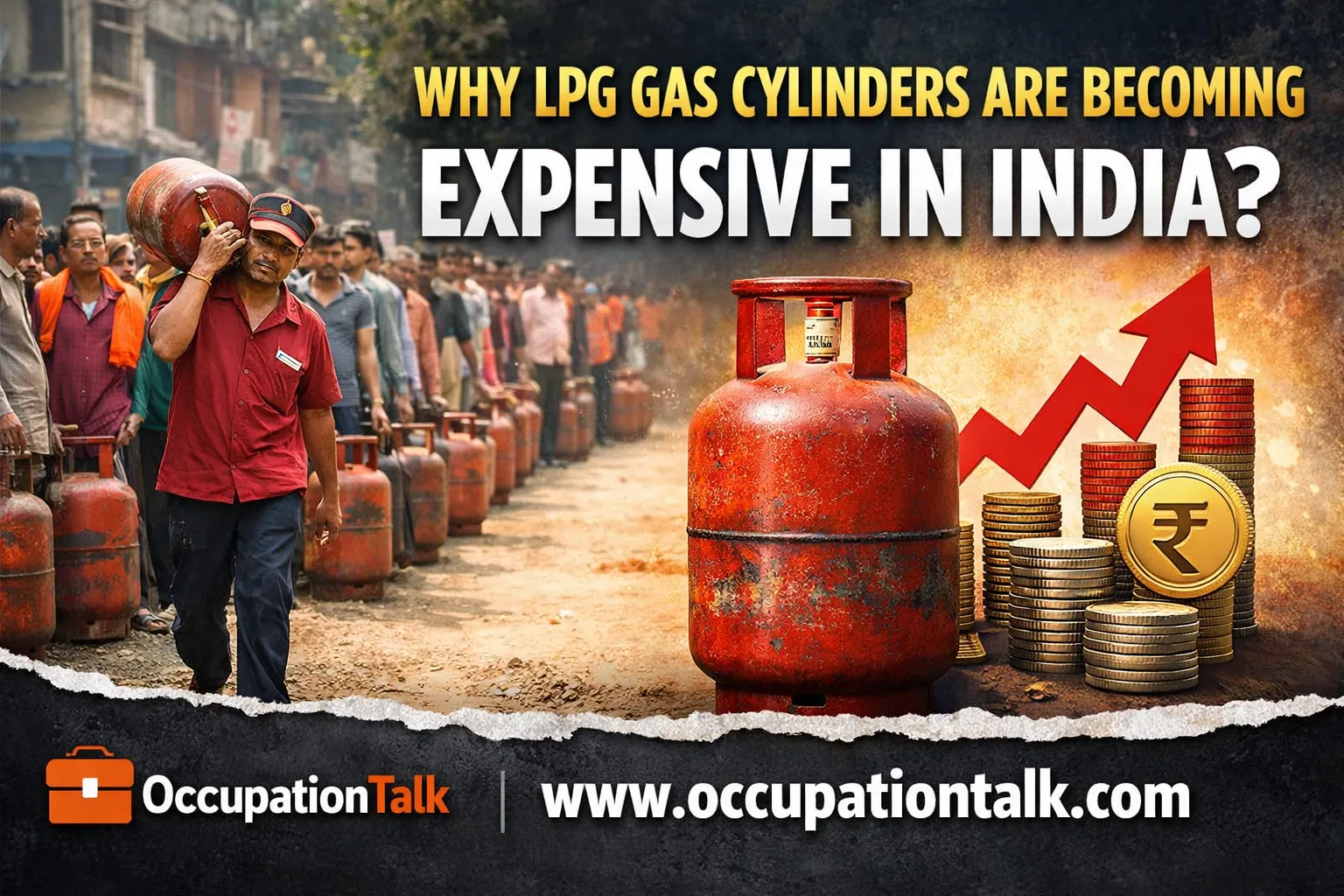
You must have noticed it by now. Your gas cylinder which used to come at around ₹800 to ₹900 is suddenly harder to get. And if you do find it somewhere outside the official channel, the person selling it is asking for ₹2,000… ₹2,500… sometimes even more.
This isn’t rumour. This is happening across India right now, in March 2026. And the reason behind it is not your local dealer, not the government alone, and definitely not something small.
The real reason is a war. A full-scale war between the United States, Israel, and Iran happening thousands of kilometres away that has directly hit your kitchen.
Let me explain exactly what happened and how it reached your doorstep.
The War That Changed Everything February 28, 2026
On February 28, 2026, the United States and Israel launched massive joint strikes on Iran, targeting nuclear sites, military bases, and top leadership. Testbook It was one of the biggest military operations the Middle East had seen in decades.
Iran retaliated with missiles and drones. And almost immediately, Iran did something that shook the entire world economy it moved to block the Strait of Hormuz.
Now, if you haven’t heard of the Strait of Hormuz before, you need to know this one fact: around 20 to 30 percent of global crude oil and LNG passes through this narrow waterway. Al Jazeera It is, quite literally, the world’s most important energy corridor.
The Strait of Hormuz was effectively restricted from March 1, 2026 Oil prices jumped from around $78 a barrel to more than $100 in less than two weeks the largest disruption to global oil supply in decades. Testbook
And India? India was right in the middle of this storm.
Why India Got Hit the Hardest
Most people don’t realise how dependent India is on the Gulf for its cooking gas. India is the world’s second-largest importer of LPG. The country produces around 40% of its LPG requirement domestically. The remaining 60% is imported, with the Gulf region accounting for the bulk of those imports. Vision IAS
To be more specific — major LPG imports come from UAE, Qatar, Saudi Arabia, and Kuwait, and most LPG shipments pass through the Strait of Hormuz. Drishti IAS
So when the Strait closed on March 1, India’s LPG supply line was essentially cut off overnight.
Within days of the conflict, domestic LPG prices were raised by ₹60 per cylinder, and Brent crude rose above $120 a barrel. Vision IAS That price hike you saw on your cylinder bill that’s where it came from.
What’s the Current Price Situation in March 2026?
Before the war, a standard 14.2 kg domestic cylinder was priced around ₹850–₹913 in most cities. As of March 14, 2026, LPG is holding at ₹913 per cylinder in Delhi after the recent hike. The Sunday Guardian
That’s the official price. But the real pain is in what’s happening off the books.
The Black Market Is Out of Control
Here is the ground reality that the news channels aren’t showing you clearly enough.
When the official supply dried up, a section of dealers and middlemen did what they always do in a crisis they hoarded. Cylinders meant for regular households were diverted and held back. And then sold privately at whatever price they could get.
The price for a 14.2 kg cylinder has reached ₹4,000 in the black market. Wikipedia
₹4,000. For one cylinder. That should cost ₹913.
People are queueing to stock up on LPG cylinders amid fears of a shortage, even though the government assures the public it has approximately one month’s supply in storage. Such is the panic that the government has gone as far as to invoke emergency measures to discourage hoarding. Al Jazeera
Poor families who cannot afford to wait, or who live in areas where official delivery has completely stopped, are being forced to pay these criminal prices. It’s not just exploitation it’s people taking advantage of a war to empty the pockets of the most vulnerable.
Authorities have warned that hoarding cylinders during supply disruptions could lead to up to 7 years in jail under the Essential Commodities Act. The Sunday Guardian But enforcement on the ground remains weak and patchy.
What Is the Government Doing?
To be fair, the government has moved quickly on this.
On March 10, the government invoked the Essential Commodities Act of 1955, notifying the Natural Gas (Supply Regulation) Order, 2026. The order established a four-tier priority system for gas allocation — with household PNG, CNG for transport, and LPG production as Tier 1 priorities. Vision IAS
PM Narendra Modi chaired a high-level meeting on March 22 to review India’s energy and fertiliser supply said to be the third such meeting since the war began on February 28. The Week
The government directed refineries to maximise LPG production by diverting propane and butane streams, increasing domestic output by about 25%, with supply prioritised for household consumption. Drishti IAS
To reduce hoarding, the minimum waiting period for domestic LPG refills was increased from 21 days to 25 days. Vision IAS The idea is to stop panic buying and artificial stockpiling.
India is also trying to find alternative suppliers. On March 5, the US Treasury Department issued a 30-day waiver allowing Indian refiners to purchase Russian crude oil already at sea. Vision IAS
The Impact on Restaurants, Hotels, and Daily Life
This isn’t just a household problem. The commercial sector is collapsing under the same pressure.
In Bengaluru, hotel associations reported that only 10% of establishments received their gas supplies on March 10. In Mumbai, commercial LPG refill delays ranged from two to eight days. Vision IAS
Restaurants and hotels in India have begun shifting to burning firewood as a fuel source, leading to an increase in food prices. Wikipedia The government has temporarily allowed hotels to use biomass for one month — a step backward, but a necessary one under the circumstances.
And the ripple effect on everyday food costs? If restaurants pay more to cook, your plate of dal-chawal at the local dhaba costs more too. The war in the Middle East has literally made your lunch more expensive.
How Long Will This Last?
That’s the question everyone wants answered. Honestly, nobody knows for certain.
The duration of the conflict remains uncertain, and its impact on India will largely depend on how long disruptions in energy supply and trade routes persist. If tensions ease quickly, markets may stabilise. However, a prolonged conflict could keep energy prices elevated and increase economic pressure. Anandrathipms
The key signal to watch: the Strait of Hormuz. If it reopens, supply chains can recover relatively fast. If the war drags on, prices will stay high — or go higher.
What Can You Do Right Now?
You can’t stop a war, but you can protect your household a little:
- Book your official cylinder refill as soon as you’re eligible don’t delay
- Do NOT buy from black market sellers, no matter how urgent it feels you’re funding the very problem making things worse
- Use a pressure cooker for all cooking to save gas
- Switch to an induction stove for simple tasks like boiling milk or making tea induction stove sales have gone through the roof for good reason
- Report hoarding in your area to your local food or petroleum department helpline
The Bottom Line
The LPG crisis of March 2026 is not a routine price hike. It is a direct consequence of the US-Israel war on Iran that began February 28, and the closure of the Strait of Hormuz that followed. India, which imports over 60% of its LPG from the Gulf, was always going to feel this — and it is feeling it hard.
Official prices have gone up by ₹60 per cylinder. But the black market is charging ₹4,000 for the same cylinder. That gap — between ₹913 and ₹4,000 — is where the real crime is happening.
At OccupationTalk, we will keep tracking this situation as it develops. Stay informed, stay calm, and don’t let panic push you into the hands of people trying to profit from a crisis.
Other Blogs You May Like

Rajaji National Park: A Hidden Wildlife Gem Near Rishikesh
Discover Rajaji National Park near Rishikesh — a lesser-known reserve with tigers, elephants, leopards, and 5 unique safari zones to explore.
Read more →
Water Damage Restoration in Chicago: Complete Homeowner's Guide to Fast Recovery
Learn how water damage restoration in Chicago works, common causes, restoration steps, costs, insurance tips, and how to protect your property.
Read more →
Why Tech Troubleshooting Guides Are Essential for Everyday Smartphone Users
Smartphones are an important part of daily life, but common issues like app crashes, internet problems, storage warnings, and network errors can create frustration. This article explains why practical troubleshooting guides are helpful for Android and iPhone users and how step-by-step fixes can solve everyday smartphone problems easily.
Read more →