
How Robots Are Changing Work Life Faster Than You Think
Category: General
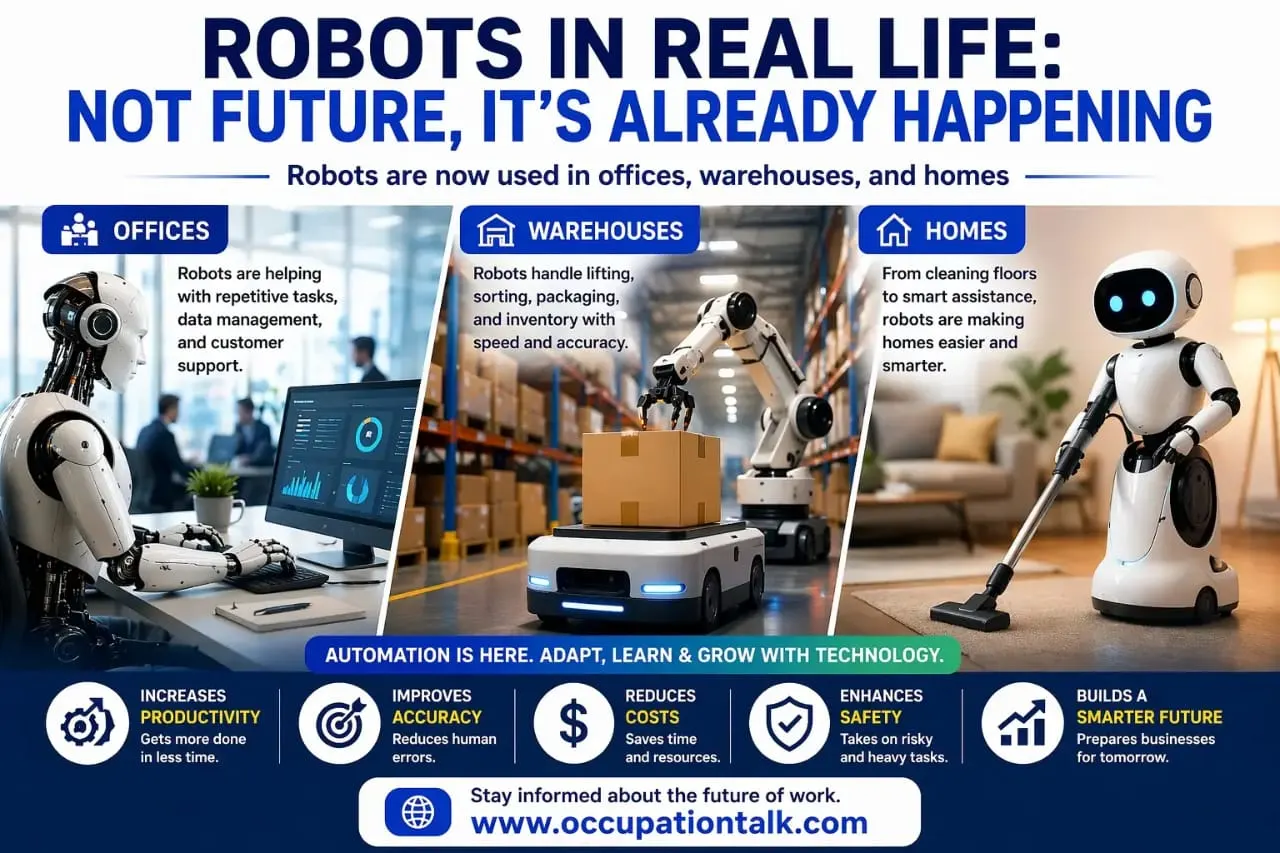
A couple of years ago, a relative of mine worked at a large warehouse packing and sorting orders. It was repetitive work, but it paid steadily, and he was good at it. Then the company brought in automated sorting machines. Within eight months, his entire team of twelve people was reduced to three. He wasn’t fired exactly. His role just quietly disappeared and was replaced with something the company called a “machine supervisor” position, which paid less and required him to watch a screen all day.
He didn’t see it coming. Most people in that building didn’t.
That’s kind of how this whole shift is happening. Not dramatically, not all at once, but steadily and quietly until one day the landscape looks completely different from what it used to be.
It Is Not Just Factory Jobs Anymore
For a long time, the conversation about robots and automation was mostly focused on manufacturing. Assembly lines, car factories, that kind of thing. And yes, those industries changed a lot. But what’s happening now goes much further.
Robots and automated systems are showing up in restaurants, hospitals, retail stores, offices, and even creative fields. Self-checkout machines replaced cashiers. Chatbots handle customer service calls. Software now writes basic news articles and financial reports. Drones are being tested for package delivery. This is not some distant future scenario. It’s already happening in workplaces across the world right now.
At occupationtalk, conversations around these shifts come up constantly because workers in almost every industry are starting to feel the effects, even if they can’t always name what’s causing the change.
The Jobs Most Affected
Some jobs are more vulnerable than others, and it mostly comes down to repetition. If a task follows a clear pattern and doesn’t require human judgment or emotional intelligence, it can likely be automated. Data entry, basic accounting, toll collection, inventory management, and telemarketing are all areas where automation has already made a significant dent.
But the more interesting conversation is about the jobs people once thought were completely safe. Lawyers used to spend hours reviewing documents, and now AI can do that in minutes. Radiologists analyze medical scans, yet AI tools are learning to do the same with impressive accuracy. Even software developers, the very people building these technologies, are now working alongside AI that can write code with them.
This doesn’t mean these professions are disappearing. It simply means the nature of work is changing. The human role is evolving, and people need to adapt, whether they feel ready or not.
And as this shift continues, businesses are also exploring smarter, AI-driven solutions to stay ahead. VISIT OUR MULTI SERVICES APP : AI POWERED GOJEK CLONE.
What Robots Actually Can’t Do
Here’s where things get a little more reassuring, at least for now.
Robots are genuinely impressive at speed, consistency, and handling large amounts of data. But they struggle with things humans do almost without thinking. Reading a room. Handling an upset customer with empathy. Making a judgment call in an unexpected situation. Leading a team through uncertainty. Caring for a child or an elderly person in a way that feels warm and human.
These skills matter more than ever precisely because the repetitive stuff is being handled elsewhere. The jobs that are growing tend to involve human connection, creative thinking, and complex problem-solving. Healthcare workers, teachers, therapists, skilled tradespeople, and other roles that involve managing the very technology replacing other jobs.
If you follow discussions on occupationtalk, you’ll notice that workers who are thriving tend to be the ones who leaned into skills that complement technology rather than compete with it.
How Workers Are Responding
Some people are scared, which is understandable. Change at this pace is genuinely unsettling, especially if your livelihood feels uncertain. But fear without action doesn’t help much.
What we’re seeing is that workers who stay curious tend to navigate this better. Learning new tools, even basic ones, makes a difference. Understanding how the technology in your industry works, even at a surface level, puts you in a much stronger position than ignoring it and hoping it doesn’t reach your corner of the world.
Employers also have a role here that doesn’t get talked about enough. Companies that invest in retraining their people instead of just replacing them tend to retain loyalty, experience, and institutional knowledge that new hires simply can’t bring. It’s a smarter long-term approach, even from a purely business standpoint.
The Bigger Picture
Here’s my honest take. Automation is not the villain in this story. Technology has always changed the nature of work, from the printing press to the personal computer. Each shift eliminated some jobs and created others. The people who struggled most were the ones caught off guard.
What’s different now is the speed. Changes that used to take decades are happening in years. That’s why staying informed matters more than it ever has. Platforms like occupationtalk exist for exactly this reason: to give people a space to understand what’s shifting in the working world and figure out how to move with it rather than against it.
One Thing Worth Doing Today
You don’t have to overhaul your career overnight. But pick one skill related to where your industry is heading and start learning it. Even an hour a week adds up over a year.
The workers who will be fine are not necessarily the most talented. They’re the ones paying attention and staying ready.
Other Blogs You May Like

Rajaji National Park: A Hidden Wildlife Gem Near Rishikesh
Discover Rajaji National Park near Rishikesh — a lesser-known reserve with tigers, elephants, leopards, and 5 unique safari zones to explore.
Read more →
Water Damage Restoration in Chicago: Complete Homeowner's Guide to Fast Recovery
Learn how water damage restoration in Chicago works, common causes, restoration steps, costs, insurance tips, and how to protect your property.
Read more →
Why Tech Troubleshooting Guides Are Essential for Everyday Smartphone Users
Smartphones are an important part of daily life, but common issues like app crashes, internet problems, storage warnings, and network errors can create frustration. This article explains why practical troubleshooting guides are helpful for Android and iPhone users and how step-by-step fixes can solve everyday smartphone problems easily.
Read more →